
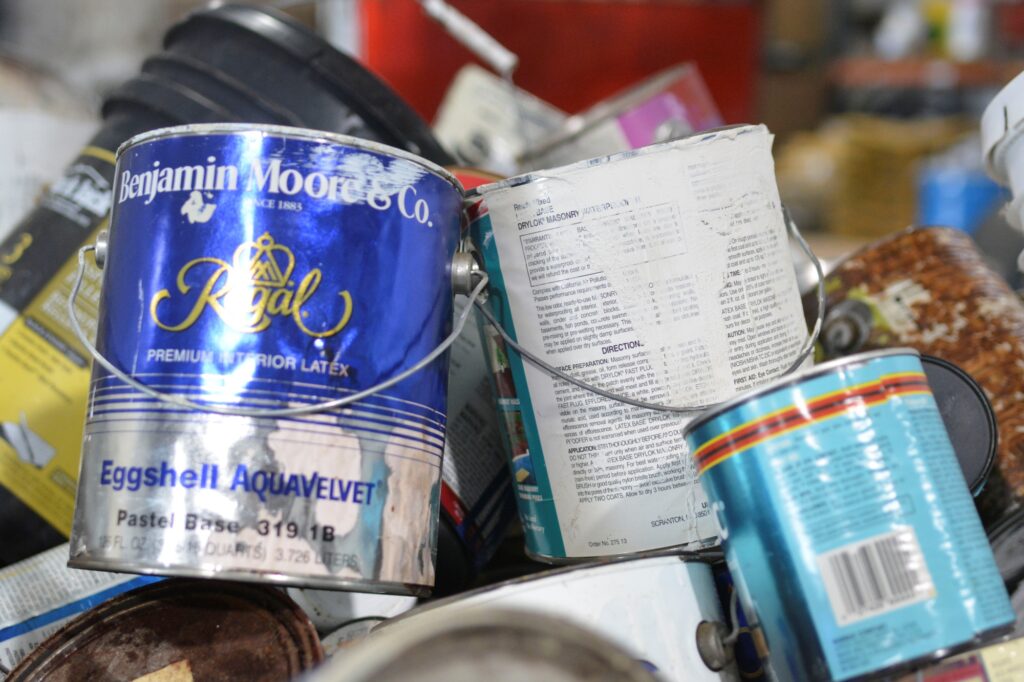
You’ve got cans of paint sitting in the garage, attic, or basement gathering dust for years. Whether it’s from a recent project or exterior paint from ’92, you might be wondering how long your home’s paint should be stored for disposal. While this blog won’t go into detail about when paint expires, it will look at the most common circumstances that render paint unusable, as well as practical reasons to finally dispose of it.
Improper Storage Can Lower Paint Shelf Life
The biggest impact of a paint’s shelf life isn’t what kind of paint it is, but how you’ve stored it. Paint is pretty stable, but when storage is measured in years, and it’s stored exposed to the elements, those factors become the biggest. Make sure to do the following:
- Resealing Paint After Use: Paint dries out (it’s supposed to), so when cans aren’t sealed properly, evaporation and leaking paint fumes degrade the paint. Make sure to seal the cans properly and place a layer of plastic wrap on the can first, then the lid, for long-term storage.
- Paint in Unheated Locations: Garages, basements, and attics are long-term storage areas for paint and are often unheated. Latex paint is vulnerable to freezing temps, and, after one or two freezes, will become unusable.
- Paint Can Corrosion: Paint cans are typically made of steel and tin and can corrode when exposed to the elements. Dripping water, leaks, and high humidity levels can all lead to rust formation, and cross-contamination with other corrosive chemicals can have similar effects.
Learn more in our blog, How to Store and Dispose of Paint and Stains, Including Latex.
Old Paint and Paint Containing Heavy Metals
Even when properly stored, paint will start to deteriorate, typically to the point of no longer being usable after 10 years. If, once you open the paint can, the paint smells rancid or has a sharp, sour smell, there may be bacteria or mold growth. Paint can also become lumpy or jelly-like in its consistency. If you want to try this paint, mix thoroughly and apply to a test section first to review the smell and application after several days.
Heavy Metals in Paints
Some older paint may contain hazardous heavy metals, most commonly lead or cadmium. Neither should be used for painting projects, with lead paint being completely banned. Note that while we accept cans of lead paint for disposal, we do not accept wood painted with lead paint or other hazardous construction waste materials.
If you have a large amount of paint that’s ready for disposal, especially if it’s been gathering up for years in your house, it’s time to contact NEDT. We can handle all types of paint, and have the capacity to provide home pick-ups for large amounts. Paints, stains, and other products with high BTU (British thermal units) values are used for electricity and fuel on industrial levels, and other products are disposed of or recycled as available. You can also bring in other household hazardous waste to us. Want to learn more or have an interest in our pick-up service? Contact NEDT today!


Leave a Reply